
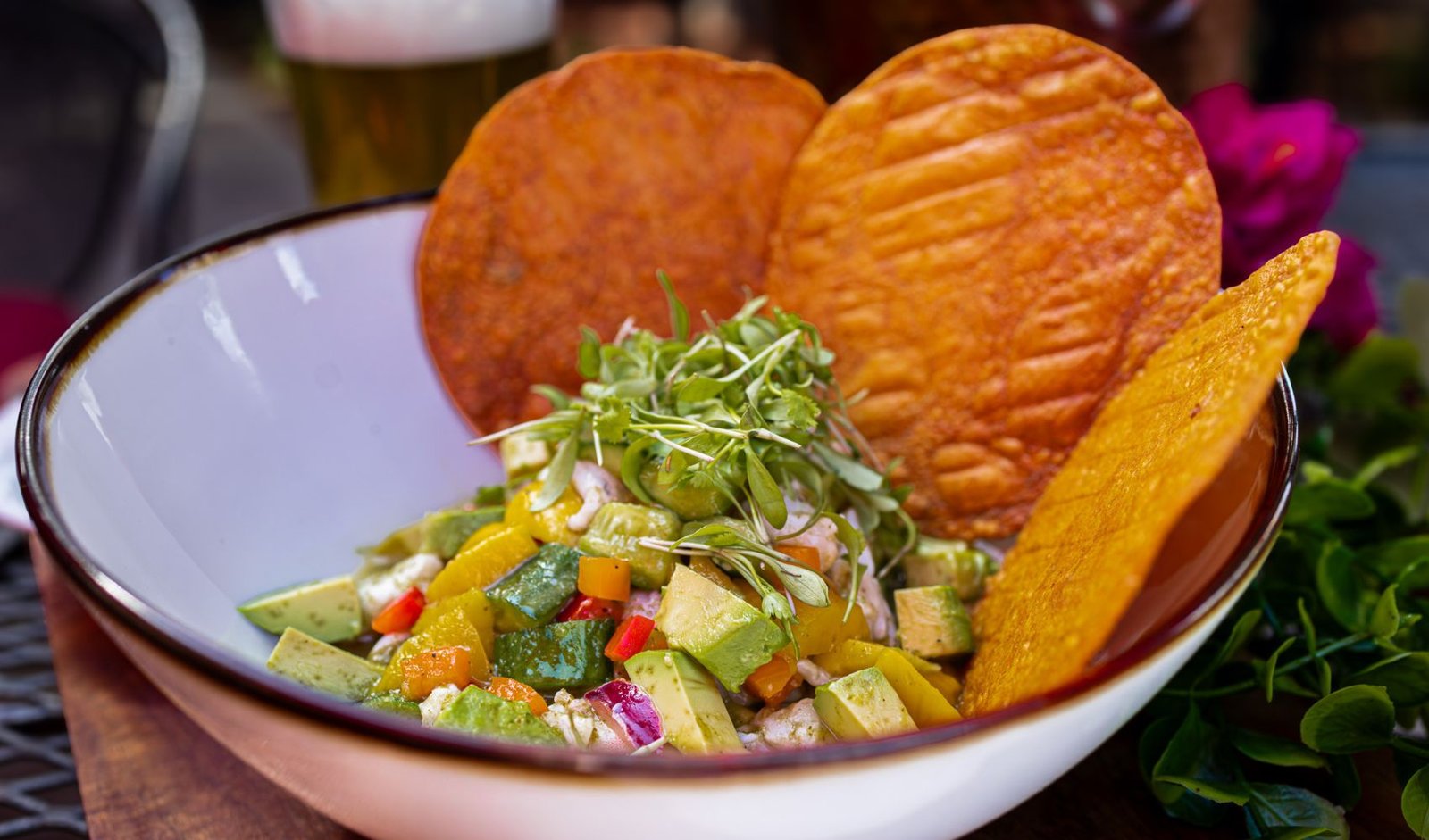
Aguachile Near Me: What Is Aguachile and How Is It Served?
Beyond the Bowl: What Is Aguachile and How Is It Traditionally Served?
Few dishes capture the vibrant, high-energy spirit of Mexican coastal cuisine as well as aguachile. Originating from the northwestern state of Sinaloa, this fiery seafood preparation has moved far beyond beachside palapas and regional marisquerías to become a staple across North American dining scenes.
For diners searching for aguachile near me, the dish represents a refreshing, flavor-forward alternative to classic ceviche. Understanding what makes an authentic aguachile, how it differs from other cold seafood preparations, and what to expect when ordering it helps you appreciate why it remains one of the most celebrated Mexican seafood dishes available today.
What Is Aguachile?
Aguachile is a popular Mexican seafood dish that comes from northwestern Mexico, especially the state of Sinaloa. It’s traditionally made with fresh raw shrimp tossed in a simple but flavorful mix of lime juice, chili, salt, and fresh herbs. People also commonly add cucumber and thinly sliced red onion for a little crunch and freshness.
One thing that sets aguachile apart from ceviche is how quickly it’s usually prepared and served. The shrimp doesn’t sit in the citrus mixture for a long time, so it stays fresh and firm while picking up the sharpness of the lime and the heat of the chilies.
There’s no single way to make aguachile. Recipes can differ from one region or restaurant to another, with variations using different types of seafood, chilies, sauces, vegetables, and garnishes. At its core, though, aguachile is all about fresh seafood, plenty of citrus, and a noticeable kick of chili.
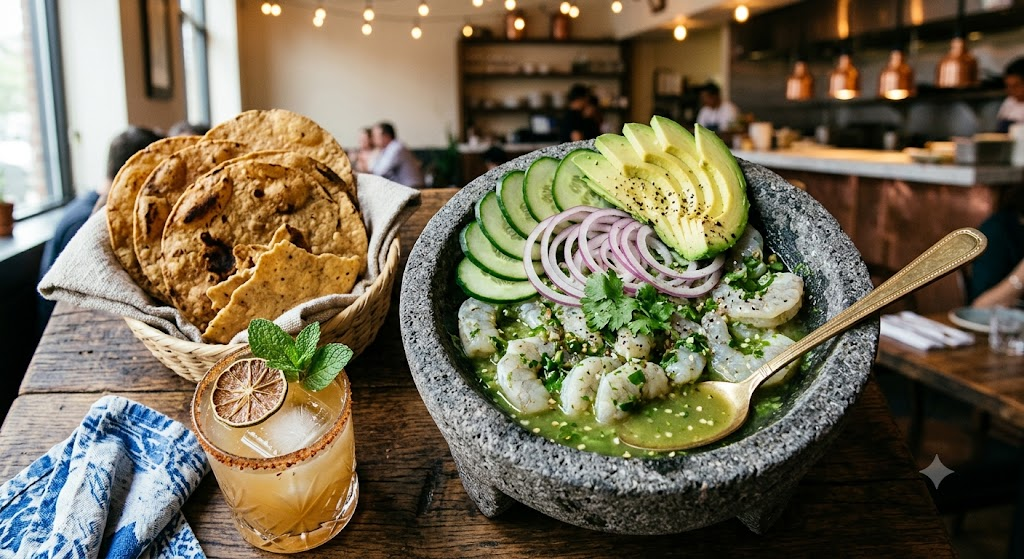
Traditional Aguachile Verde featuring butterflied shrimp, sliced cucumber, red onion, and fresh avocado in a fiery lime-chili broth.
The traditional preparation relies on four core elements:
Butterflied Raw Shrimp: High-quality, fresh shrimp are split open down the back. This expands the surface area, allowing the high acidity of the citrus marinade to flash-cure the outer layer while keeping the interior sweet, cold, and tender.
The “Chili Water” Broth: Freshly squeezed lime juice is pureed with fresh green chilies—traditionally native chiltepin peppers, though serrano or jalapeño peppers are widely used in contemporary kitchens—along with fresh cilantro and sea salt.
Crisp Vegetables: Sliced English cucumbers and thin red onion rings provide essential texture and a crisp, cooling contrast to the liquid heat.
Rich Accents: Ripe avocado slices add a velvety fat content that coats the palate and softens the sharp kick of raw chili and citrus juice.
What Does Aguachile Taste Like?
Aguachile has a fresh, bright flavor with a mix of tangy lime, chili heat, herbs, and salt. The seafood itself adds a mild natural sweetness, while cucumber and red onion bring extra freshness and crunch. If avocado is added, its creamy texture helps balance the sharper lime and chili flavors.
The flavor can change quite a bit depending on the seafood, peppers, and other ingredients used. Green aguachile tends to taste fresh and herb-heavy, while red or darker versions can have a deeper, sometimes smokier chili flavor.
If you’re trying aguachile for the first time, expect something refreshing and light, but with plenty of citrus and a noticeable kick of heat. It’s a good option if you want seafood that feels fresh and flavorful without being too heavy.
Is Aguachile Spicy?
Usually, yes. Aguachile is known for its chili-forward flavor, although the actual level of heat depends on the peppers and how many of them are used.
Serrano, jalapeño, chiltepin, and chile de árbol are some of the peppers that may be used, and each brings a slightly different kind of heat. A good aguachile should let the chili add character without completely masking the flavor of the seafood.
If you don’t handle spicy food well, it’s worth asking your server which peppers are used and whether the dish can be made milder. Green aguachile often has a fresh, sharp heat, while red or darker versions can have a richer or smokier chili flavor.
What Is the Difference Between Aguachile and Ceviche?
Aguachile and ceviche have a lot in common. Both are fresh seafood dishes that often use citrus, herbs, onions, and chilies. The main difference is how the seafood is prepared and how the citrus mixture is used.
Aguachile is usually served soon after the raw seafood is mixed with a lime-based, chili-heavy sauce. This keeps the seafood relatively firm and fresh. Ceviche generally sits in citrus juice for longer, allowing the acidity to have more of an effect on the seafood.
The two dishes can also look and taste quite different. Aguachile tends to put more emphasis on the chili-lime liquid, while ceviche often includes ingredients such as tomato, onion, cilantro, and peppers mixed directly with the seafood.
That said, there isn’t one universal recipe for either dish. Ingredients and preparation can vary depending on the region, restaurant, and the chef’s approach.
Aguachile vs. Ceviche: Understanding the Difference
It is common for diners browsing a menu at a Mexican seafood restaurant to mistake aguachile for ceviche. While both highlight raw seafood brightened by citrus, their culinary execution, marinating times, and textural outcomes are distinctly different.
| Culinary Element | Traditional Aguachile | Classic Mexican Ceviche |
| Marinating Time | Immediate (5–10 minutes): Served right after tossing so the shrimp stays firm, cold, and snappy. | Extended (20–60+ minutes): Citrus acid thoroughly denatures the protein, turning the flesh opaque and firm. |
| Marinade Base | High-volume, blended green or red chili-and-lime broth (agua). | Citrus juice mixed directly with diced tomatoes, onions, and herbs. |
| Seafood Cut | Whole raw shrimp, butterflied flat. | Finely diced or chopped white fish, shrimp, or octopus. |
| Flavor Profile | Sharp, fiery, herbal, and immediate heat. | Balanced, tangy, tomato-forward, and mild. |
Regional Varieties: Green, Red, and Black
As coastal chefs bring creative interpretations to classic regional fare, modern menus often feature three distinct styles of aguachile broth:
1. Aguachile Verde (Green)
The quintessential classic. Blended with fresh serrano or jalapeño peppers, cilantro, and lime juice, Aguachile Verde yields a bright, grassy, and herb-forward flavor profile with a clean, sharp heat.
2. Aguachile Rojo (Red)
For diners seeking a deeper, more direct spice, the red variant incorporates dried or charred chilies such as chiltepin, chile de árbol, or piquín. The heat builds more slowly than the green version, offering subtle smoky notes.
3. Aguachile Negro (Black)
A popular modern evolution featuring savory Umami elements. The marinade blends lime juice and roasted chilies with dark savory sauces, including soy sauce and Worcestershire (salsa inglesa), resulting in a rich, complex finish.
How Aguachile Is Traditionally Served and Enjoyed
Authentic presentation is a critical component of enjoying Mexican seafood dishes. Aguachile is designed to be visually striking and served exceptionally cold.
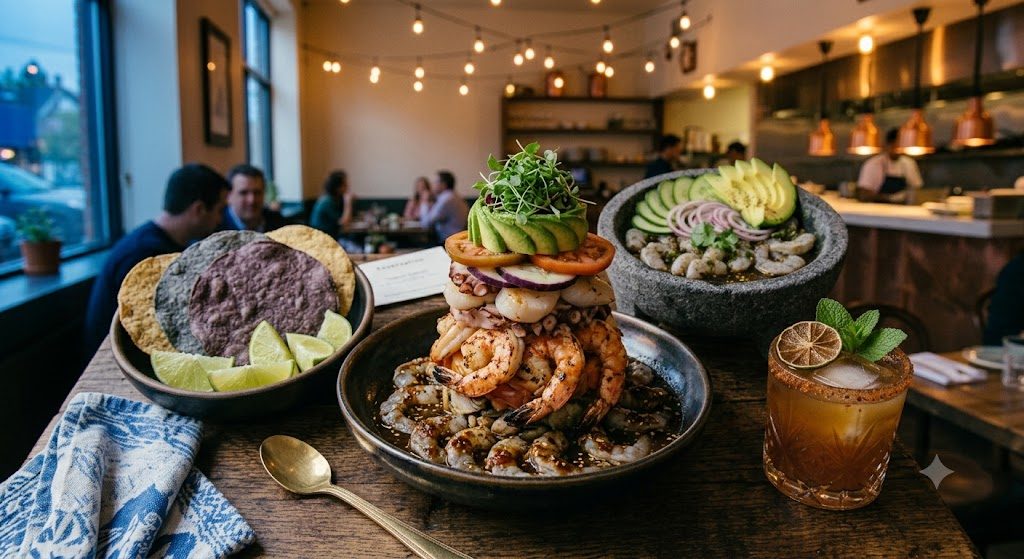
Modern presentation of Aguachile paired with crunchy corn tostadas.
The Vessel: It is traditionally plated in a wide, shallow ceramic dish or a carved volcanic stone molcajete. The flat surface allows the butterflied shrimp to lie in a single layer, ensuring every piece remains partially submerged in the chilled chili water.
The Accompaniments: Aguachile is always served alongside warm, freshly fried corn tortilla chips or thick, salted corn tostadas.
The Technique: Rather than using a fork alone, diners build bite-sized tostadas. You layer a piece of crisp cucumber, a butterflied shrimp, and a slice of red onion onto a tostada, using a spoon to drizzle extra green broth over the top just before taking a bite.
How Do You Eat Aguachile?
Aguachile is usually served cold with crisp corn tostadas or tortilla chips. The crunch works well with the tender seafood and the bright, flavorful chili-lime mixture.
A simple way to eat it is to scoop up some shrimp along with cucumber, red onion, avocado, and a little of the aguachile sauce, then place everything on a tostada. You get a bit of everything in one bite: fresh seafood, citrus, chili heat, creamy avocado, and plenty of crunch.
The way aguachile is served can vary from one restaurant to another. Some places keep it fairly traditional, while others add their own sauces, garnishes, or ingredients to give the dish a different character.
What Should You Look for When Searching for Aguachile Near Me?
If you’re searching for aguachile near me, don’t just look for a restaurant that happens to have it on the menu. Since the dish relies on fresh seafood and a freshly made chili-lime mixture, the quality of the ingredients and preparation can make a big difference.
Fresh Seafood
Start with the seafood. Since aguachile is typically served raw or lightly cured, freshness and proper handling are especially important. A restaurant that takes its seafood seriously should be able to tell you what seafood is being used and how the dish is prepared.
Freshly Prepared Sauce
The sauce is a big part of what makes aguachile taste like aguachile. Look for a preparation where the lime, chilies, herbs, and seasoning work together rather than one flavor taking over completely.
Ingredients That Add Texture
Cucumber, red onion, avocado, herbs, and tostadas aren’t just there for decoration. They add crunch, creaminess, freshness, and different textures that balance the seafood and chili-lime sauce.
A Style You’ll Enjoy
Not every aguachile tastes the same. Some restaurants stick closer to traditional preparations, while others put their own spin on the dish. If you have a preference for a certain type of seafood or a milder or hotter level of spice, check the menu or ask your server before ordering.
If you’re looking for aguachile near me in Waukegan, checking the current menu and asking how the dish is prepared can help you find a version that matches what you’re looking for.
Where Can You Try Aguachile in Waukegan?
If you’re searching for aguachile near me in Waukegan, La Chuparosa offers its own take on this Mexican seafood favorite.
The restaurant’s Aguachile Chuparrosa combines shrimp with green Thai chili, beet aguachile sauce, Persian cucumber, red onion, avocado, and micro cilantro. The result brings together fresh seafood, chili heat, tangy acidity, cooling vegetables, and creamy avocado, giving the dish a modern twist.
Aguachile is just one part of La Chuparosa’s Mexican-inspired menu. The restaurant also offers other seafood dishes along with tacos, premium meats, cocktails, and other options, making it easy to turn an aguachile order into part of a larger meal.
If you’re exploring Mexican seafood in Waukegan and want something fresh, citrusy, and spicy rather than a heavier entrée, aguachile is worth trying.
What to Look For When Searching for “Aguachile Near Me”
When evaluating a local Mexican seafood restaurant, look for establishments that prioritize ingredient freshness and authentic execution:
Freshness First: Because the shrimp spends minimal time in citrus juice, the seafood must be ultra-fresh, high-grade, and handled with meticulous care.
Made-to-Order Marinades: The chili-lime broth should be vibrant and bright in color, indicating it was pureed fresh rather than pre-mixed hours prior.
Balanced Heat: True aguachile is undeniably spicy, but the heat should complement—rather than completely overwhelm—the sweet natural flavor of the seafood.
Experience Elevated Mexican Seafood at La Chuparrosa
If you are looking for an exceptional culinary destination to experience authentic Mexican seafood dishes, La Chuparrosa brings coastal flavors to life through high-end culinary craft.
Located in Waukegan, Illinois, La Chuparrosa blends regional Mexican heritage with upscale urban dining under the direction of Chef Efrain Torres. Guests can explore signature raw-bar offerings like the Aguachile Chuparrosa, alongside premium prime steaks, octopus specialties, and handcrafted agave mixology.
Whether you are exploring cold seafood starters or planning a complete dinner experience, visit La Chuparrosa to explore the menu or reserve a table.
Searching for authentic aguachile near me? Discover what makes Mexican aguachile unique, how it differs from ceviche, and how it is traditionally served.
La Chuparrosa Menu: Signature raw-bar offerings like the Aguachile Chuparrosa.
La Chuparrosa Reservations / Location: Reserve a table.
Ready to experience authentic Mexican coastal cuisine? Explore the upscale menu and reserve your table at La Chuparrosa today.
Frequently Asked Questions About Aguachile
Is aguachile safe to eat since the shrimp is raw?
Yes, provided the seafood is high-grade and handled properly. While the citric acid in lime juice alters the texture of the shrimp—a process called denaturing that resembles cooking—it does not kill all bacteria the way heat does. Reputable seafood restaurants use fresh, high-quality shrimp kept at strict refrigeration temperatures to ensure it is completely safe and fresh to consume.
How spicy is traditional aguachile?
Aguachile is intentionally spicier than standard ceviche. The exact heat level depends on the chilies used in the marinade:
Green (Verde): Moderate to high heat from fresh serrano or jalapeño peppers.
Red (Rojo): Intense, lingering heat from dried chiltepin or chile de árbol.
Black (Negro): Balanced, savory heat tempered by umami-rich dark sauces.
If you are sensitive to spice, you can ask your server if the kitchen can prepare a milder lime-and-cilantro base with chilies served on the side.
What is the best drink to pair with aguachile?
Because aguachile features high acidity and direct chili heat, refreshing drinks with slight sweetness or effervescence make ideal pairings:
Agave Spirits: A crisp, lime-forward craft margarita or a smoky mezcal cocktail with a chili-salt rim complements the earthy notes of the marinade.
Mexican Beer: An ice-cold light lager or a classic Michelada cuts through the heat and cleanses the palate between bites.
- Non-Alcoholic Options: Traditional Aguas Frescas—especially cucumber-lime, hibiscus (jamaica), or cream-based horchata—help soothe the palate.
Can aguachile be made with other types of seafood?
While butterflied raw shrimp is the traditional star of Sinaloan aguachile, modern coastal kitchens frequently offer variations featuring sliced sea scallops, raw tuna, yellowtail, or cooked octopus. Multi-seafood preparations combining shrimp and octopus in a single bowl are also widely popular.
What is aguachile made of?
Aguachile is usually made with fresh raw shrimp, lime juice, fresh chilies, salt, and herbs. Depending on the recipe, you may also find ingredients such as cucumber, red onion, avocado, or other fresh vegetables.
Is aguachile the same as ceviche?
Not quite. Aguachile and ceviche are both citrus-based seafood dishes, but they are prepared differently. Aguachile is typically served soon after the seafood is mixed with a fresh, chili-heavy lime mixture, while ceviche usually sits in citrus juice for longer. The exact preparation can vary depending on the region and restaurant.
What do you eat aguachile with?
Aguachile is often served with crisp corn tostadas or tortilla chips. Cucumber, red onion, avocado, and fresh herbs are also common additions. They add crunch, creaminess, and freshness to the seafood and spicy lime mixture.
What seafood is used in aguachile?
Shrimp is the seafood most commonly associated with aguachile, especially in traditional preparations from Sinaloa. That said, modern restaurants may use other types of seafood or combine several kinds in one dish.
Is aguachile always spicy?
Aguachile is generally known for its chili-forward flavor, but it isn’t always extremely hot. The amount and type of chili used can make a big difference. If you prefer less heat, ask your server about the peppers and whether a milder version is available.
Can I find aguachile in Waukegan?
Yes. La Chuparosa serves its Aguachile Chuparrosa, made with shrimp, green Thai chili, beet aguachile sauce, Persian cucumber, red onion, avocado, and micro cilantro. It puts a modern spin on the traditional dish while keeping the fresh seafood, chili, and citrus elements at the center.